I'm now taking requests!
For example:
"I'd like an Asian noodle soup, but I'm allergic to soy."
"Can you make a dish that contains my two favourite ingredients? They are cinnamon and eggplant."
"The thought of more than 5 ingredients daunts me. Something simple and delicious, please!"
Just write in to this blog and let me know what you want, and I'll be on the case!
Sunday, 20 June 2010


Wednesday, 16 June 2010
Herbal seaweed and tofu soup
Serves 2 - 4
Difficulty: Medium ***
Ingredients:
200 g tofu
handful fresh coriander
handful dry seaweed
1 stock cube
2 cloves garlic
10 ml soy sauce
100 g zucchini
1 tsp anis seed
1 cinammon stalk
1 tsp cloves
1 tsp nutmeg
1 thumb-sized piece fresh ginger (crushed)
1 tsp fennel
1 handful kaffir lime leaves
Optional: 200 grams rice or wheat noodles

1. Place anis, cinnamon, cloves, nutmeg, ginger, kaffir lime leaves and fennel in a small pot with a little bit of water and bring to a boil, then turn on low heat.
2. Allow to simmer under lid as you prepare the rest of the ingredients.
*for best results, prepare herbal mixture an hour in advance
3. Put one litre of water in a large pot, and add stock cube and soy sauce.
4. Turn on medium heat.
5. Dice tofu, slice zucchini and add them to soup, along with seaweed.
6. Crush and finely chop garlic.
7. Place in a small pan with a bit of cooking oil and fry until golden brown, then remove from heat.
8. Chop coriander.
9. Strain herb mixture through a sieve or tea-strainer, into the soup
10. Add garlic to the soup and serve with coriander.
If you are adding noodles to your soup, add them as number '9.5', and wait until the noodles are cooked (about 2-3 minutes) before progressing to 10.
As a soup, the dish is good as a side for about 4 people. With the noodles, expect a large main for 2 or a more modest main for 3.
This dish had an interesting effect on my Finnish guinea pig. He liked it, and said it was like having gingerbread cookies in savoury liquid form. Similar spices are used in Finnish gingerbread cookies. If you're worried the association will throw you, don't use the cinnamon, and use galangal instead of ginger.
Difficulty: Medium ***
Ingredients:
200 g tofu
handful fresh coriander
handful dry seaweed
1 stock cube
2 cloves garlic
10 ml soy sauce
100 g zucchini
1 tsp anis seed
1 cinammon stalk
1 tsp cloves
1 tsp nutmeg
1 thumb-sized piece fresh ginger (crushed)
1 tsp fennel
1 handful kaffir lime leaves
Optional: 200 grams rice or wheat noodles
1. Place anis, cinnamon, cloves, nutmeg, ginger, kaffir lime leaves and fennel in a small pot with a little bit of water and bring to a boil, then turn on low heat.
2. Allow to simmer under lid as you prepare the rest of the ingredients.
*for best results, prepare herbal mixture an hour in advance
3. Put one litre of water in a large pot, and add stock cube and soy sauce.
4. Turn on medium heat.
5. Dice tofu, slice zucchini and add them to soup, along with seaweed.
6. Crush and finely chop garlic.
7. Place in a small pan with a bit of cooking oil and fry until golden brown, then remove from heat.
8. Chop coriander.
9. Strain herb mixture through a sieve or tea-strainer, into the soup
10. Add garlic to the soup and serve with coriander.
If you are adding noodles to your soup, add them as number '9.5', and wait until the noodles are cooked (about 2-3 minutes) before progressing to 10.
As a soup, the dish is good as a side for about 4 people. With the noodles, expect a large main for 2 or a more modest main for 3.
This dish had an interesting effect on my Finnish guinea pig. He liked it, and said it was like having gingerbread cookies in savoury liquid form. Similar spices are used in Finnish gingerbread cookies. If you're worried the association will throw you, don't use the cinnamon, and use galangal instead of ginger.
Tuesday, 15 June 2010
Tofu with sweet basil and cashew
Serves 2
Difficulty: Easy **
200 g tofu
Handful sweet basil
10 ml mushroom sauce
10 ml soy sauce
2 handfuls cashews
5 champignon mushrooms
¼ paprika
2 cloves garlic
1 onion
chili

Difficulty: Easy **
200 g tofu
Handful sweet basil
10 ml mushroom sauce
10 ml soy sauce
2 handfuls cashews
5 champignon mushrooms
¼ paprika
2 cloves garlic
1 onion
chili
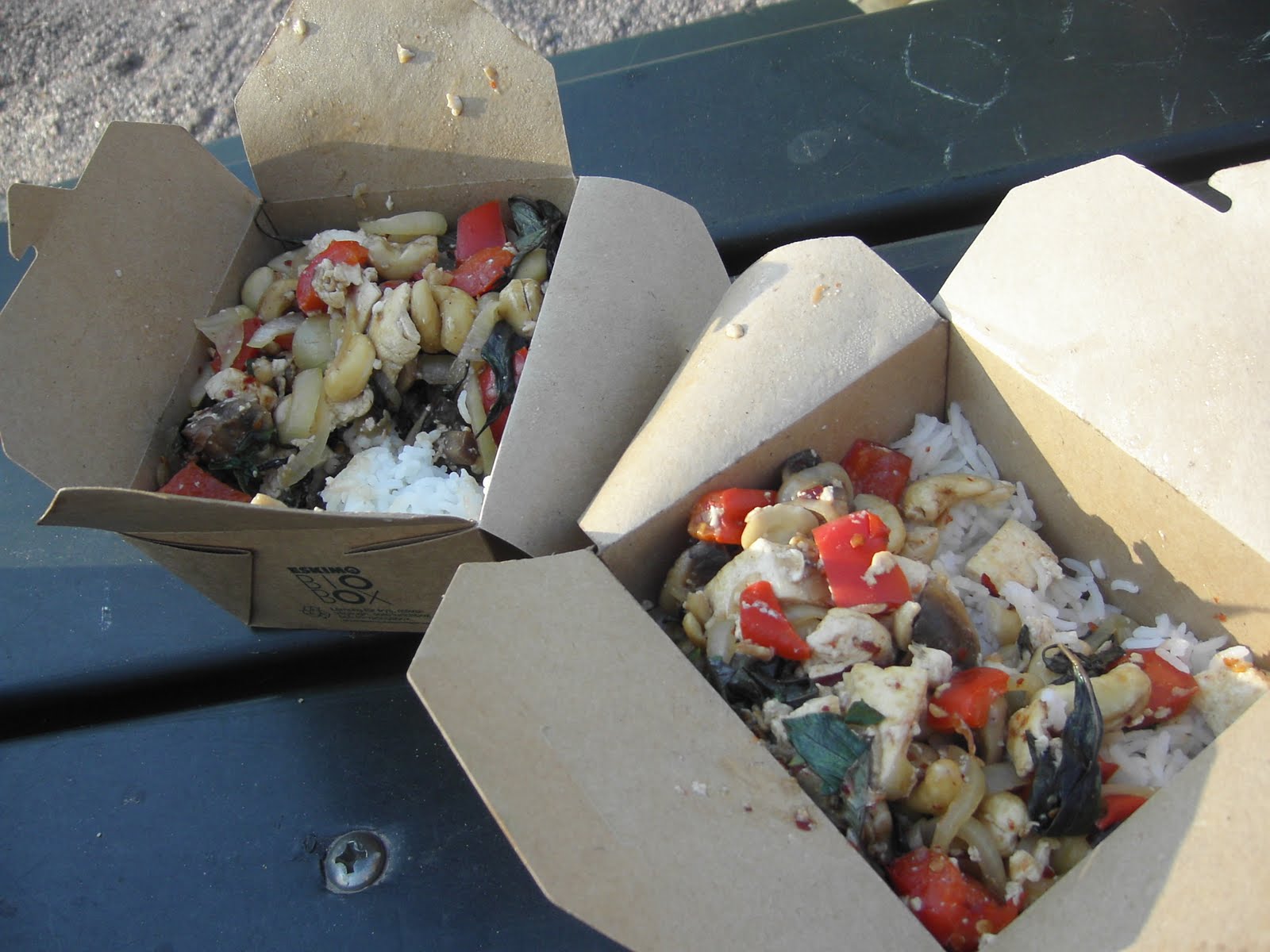
1. Pre-slice onion, mushrooms and paprika.
2. Crush garlic and fry in wok until golden brown
3. While waiting, cut tofu into cubes and add to wok when garlic is ready.
4. Immediately add soy sauce and mushroom sauce.
5. Add onions, mushrooms, cashews and paprika, stirring constantly.
6. Finally, add chili to taste and basil leaves. Stir-fry for another 20 seconds and remove from heat.
5. Serve with rice.
About the ingredients:
My previous post discusses soy sauce in some depth. This time, you may be wondering what mushroom sauce is. First of all, it's not mushroom soy sauce, which is often to be found next to the soy sauce in an Asian grocery. It's a vegetarian substitute for oyster sauce, so it'll be thick. My mom, who's not a vegetarian, prefers mushroom sauce to oyster sauce, saying the smell of it is better.
Monday, 14 June 2010
Walnut bruschetta
Serves 3 - 4
Difficulty level: Easy **
Ingredients:
2 medium tomatoes
1 clove garlic
40 ml chopped walnuts
8 slices ciabatta bread
20 ml balsamic vinegar
20 ml olive oil
handful basil
pinch salt
pepper

1. Finely dice tomatoes.
2. Mince garlic and basil and combine with tomatoes.
3. Add olive oil, vinegar and walnuts.
4. Mix well, then add salt to taste.
5. Grill ciabatta bread until slightly brown.
6. Remove from oven and put tomato mixture on top.
7. Grind pepper onto bruschettas as a finishing touch and serve
Difficulty level: Easy **
Ingredients:
2 medium tomatoes
1 clove garlic
40 ml chopped walnuts
8 slices ciabatta bread
20 ml balsamic vinegar
20 ml olive oil
handful basil
pinch salt
pepper

1. Finely dice tomatoes.
2. Mince garlic and basil and combine with tomatoes.
3. Add olive oil, vinegar and walnuts.
4. Mix well, then add salt to taste.
5. Grill ciabatta bread until slightly brown.
6. Remove from oven and put tomato mixture on top.
7. Grind pepper onto bruschettas as a finishing touch and serve
Friday, 11 June 2010
More upcoming recipes

Strawberry soy yoghurt crumble cake

Chocolate cream cake with linganberries

Pancakes

Lentil soup

Spring onion soup

Soy-free rice noodle soup

Gluten free apple-rosehip crumble for babies

Strawberry cream pie

Spaghetti with mushroom cream sauce
+ 'Julius' cappuccino raspberry cake
+ Chocolate coconut cake
+ Easy barbecue sauce
+ Gluten and soy-free barbecue sauce
+ Some other recipes I forgot to take pictures of :/
Instant noodles (??!)
Everyone has a lazy day once in a while, when grocery shopping just isn't the most appealing thing to do, or it's raining cats and dogs... or you just don't feel like cooking. Those, for me, are instant noodle days... But why settle for plain instant noodles? Here's a little tip: Keep some frozen dumplings in the freezer, texturized soy protein, instant noodles and dried seaweed in strips in the cupboard, and while your at it, next time you get fresh coriander, freeze a little of that, too. And hey presto, all of a sudden, you don't have to feel too bad about eating a completely unhealthy meal anymore!
Difficulty level: Too easy!

1 pack favourite instant noodles. (I've got kimchi instant noodles)
1 handful texturised soy protein strips
4 frozen dumplings (I used mushroom dumplings)
1 tablespoon chopped frozen coriander (fresh, if you happen to have it lying around!
1 tablespoon seaweed flakes or a handful of dried seaweed
1 teaspoon soysauce
1. Open your instant noodle package from only one end, and empty your instant noodles and condiments into a pot. Use the empty package to measure one full pack of water into the pot, and you'll have the right amount of water.
2. Bring to a boil and then toss in the rest of the ingredients.
3. Decrease heat by about half and let it boil for another 2-3 minutes.
Hooray, it's done!
Optional extras: Add a squeeze of lime and a bit of spring onion.
About the ingredients:
p.s. Here's a dirty secret of mine: I love instant noodles so much, I have to keep them in a box behind all the healthier stuff, so they are out of sight, out of mind... and if they do pop into my mind, the healthy stuff blocking the way guilt-trips me first, so I might reconsider. :)
Difficulty level: Too easy!

1 pack favourite instant noodles. (I've got kimchi instant noodles)
1 handful texturised soy protein strips
4 frozen dumplings (I used mushroom dumplings)
1 tablespoon chopped frozen coriander (fresh, if you happen to have it lying around!
1 tablespoon seaweed flakes or a handful of dried seaweed
1 teaspoon soysauce
1. Open your instant noodle package from only one end, and empty your instant noodles and condiments into a pot. Use the empty package to measure one full pack of water into the pot, and you'll have the right amount of water.
2. Bring to a boil and then toss in the rest of the ingredients.
3. Decrease heat by about half and let it boil for another 2-3 minutes.
Hooray, it's done!
Optional extras: Add a squeeze of lime and a bit of spring onion.
About the ingredients:
Frozen dumplings: Visit your Asian grocery's frozen foods section, and most have an extensive collection of frozen dumplings. Check the ingredients, cos even if they claim to be 'vegetable dumplings', many will contain pork!
Instant noodles: There's NOTHING healthy in instant noodles, but sometimes we're just lazy. Some at least make the effort to contain some dehydrated veggies, which is better than nothing, but certainly doesn't go very far in terms of adding to the health factor. I'd recommend finding instant noodles at an Asian grocery, and not at a regular supermarket, because usually the selection is far better at the former, and the flavours are more 'authentic'. Western instant noodles, sorry to say, often taste like plain boiled pasta.
Seaweed: Great for iodine and also contains iron. Available at any Asian grocer and health food stores.
p.s. Here's a dirty secret of mine: I love instant noodles so much, I have to keep them in a box behind all the healthier stuff, so they are out of sight, out of mind... and if they do pop into my mind, the healthy stuff blocking the way guilt-trips me first, so I might reconsider. :)
Wednesday, 9 June 2010
Chickpea and tempeh salad with avocado
Appetizer or side-dish for 4
Level: Easy-intermediate **
½ can or 200 g chickpeas
20 ml bulgur or quinoa (gluten-free)
20 ml sesame
20 ml water
120 g spinach
20 ml olive oil
20 ml cooking oil
¼ lime
40 ml soy sauce
handful basil
6 cherry tomatoes
10 ml palm sugar
100 grams tempeh
1 avocado
Tools: Frying pan or wok, small pot

1. Boil bulgur in about twice as much water as grains until the water has immersed and bulgur is soft. Add olive oil and stir.
2. Remove from pan and leave to cool.
3. Cut tempeh into small strips and fry in cooking oil with a dash of soy sauce until brown.
4. Remove from pan and leave to cool.
5. Mix sesame seeds, water, olive oil, soy sauce and sugar. Squeeze the juice from the lime and stir together until the sugar is dissolved to make the salad dressing.
6. When bulgur and tempeh are cool, add to spinach, basil, tomatoes and chickpeas.
7. Chop the avocado into cubes and add to salad before serving with salad dressing.
About the ingredients:
Level: Easy-intermediate **
½ can or 200 g chickpeas
20 ml bulgur or quinoa (gluten-free)
20 ml sesame
20 ml water
120 g spinach
20 ml olive oil
20 ml cooking oil
¼ lime
40 ml soy sauce
handful basil
6 cherry tomatoes
10 ml palm sugar
100 grams tempeh
1 avocado
Tools: Frying pan or wok, small pot

1. Boil bulgur in about twice as much water as grains until the water has immersed and bulgur is soft. Add olive oil and stir.
2. Remove from pan and leave to cool.
3. Cut tempeh into small strips and fry in cooking oil with a dash of soy sauce until brown.
4. Remove from pan and leave to cool.
5. Mix sesame seeds, water, olive oil, soy sauce and sugar. Squeeze the juice from the lime and stir together until the sugar is dissolved to make the salad dressing.
6. When bulgur and tempeh are cool, add to spinach, basil, tomatoes and chickpeas.
7. Chop the avocado into cubes and add to salad before serving with salad dressing.
About the ingredients:
Soy sauce: Although the function of soy sauce is to add some salt to a dish, don’t replace it with salt! Soy sauce also adds a fullness of flavour to the dish that, in the end, makes you require less salt. It's the famed ‘umami’ flavour that can also be found in other ingredients such as tomatoes, tamarind, and, more notoriously, monosodium glutamate.
Any aficionado of Asian cooking will tell you that it’s not all the same to use a Thai, Indonesian, Japanese or Chinese soy sauce. Regardless of what country a soy sauce comes from, the preparation of it is slightly different, and the amount of salt and sugar vary. My recipes require Thai soy sauce, unless otherwise specified. Using a different soy sauce will result in dishes that are not balanced with other ingredients in the recipe, too salty, or too sweet. If you are not located in Asia, most Asian groceries stock Thai soy sauce in both large and small bottles. Look out for the 'fat baby' brand (both plain or mushroom flavoured are fine)
Bulgur: If you've eaten Mediterranean food, you'll probably be familiar with this ingredient. In Turkey, it's used in salads such as tabouleh and kisir. It's a very healthy wholegrain, usually made from durum wheat. It's normally available from any well-stocked supermarket, but if not, try a Mediterranean store or an Indian store (under the name of daliya).
Tempeh: Used most often in Indonesian cooking, it's a sort of 'wholebean' tofu with a firmer texture and stronger flavour. It's usually available at larger Asian stores, and sometimes at health food stores.
Palm sugar: Commonly used in South and Southeast Asian cooking, any Asian grocery, and some large supermarkets stock it. It has a stronger, mustier flavour than cane sugar, and a higher nutritional value.
Basil: In this particular recipe, I've used 'Italian' basil, but one can use sweet basil, also known as Thai basil for a stronger flavour. It's a good source of vitamin K, and, like other leafy greens, iron, manganese and magnesium.
Subscribe to:
Posts (Atom)

